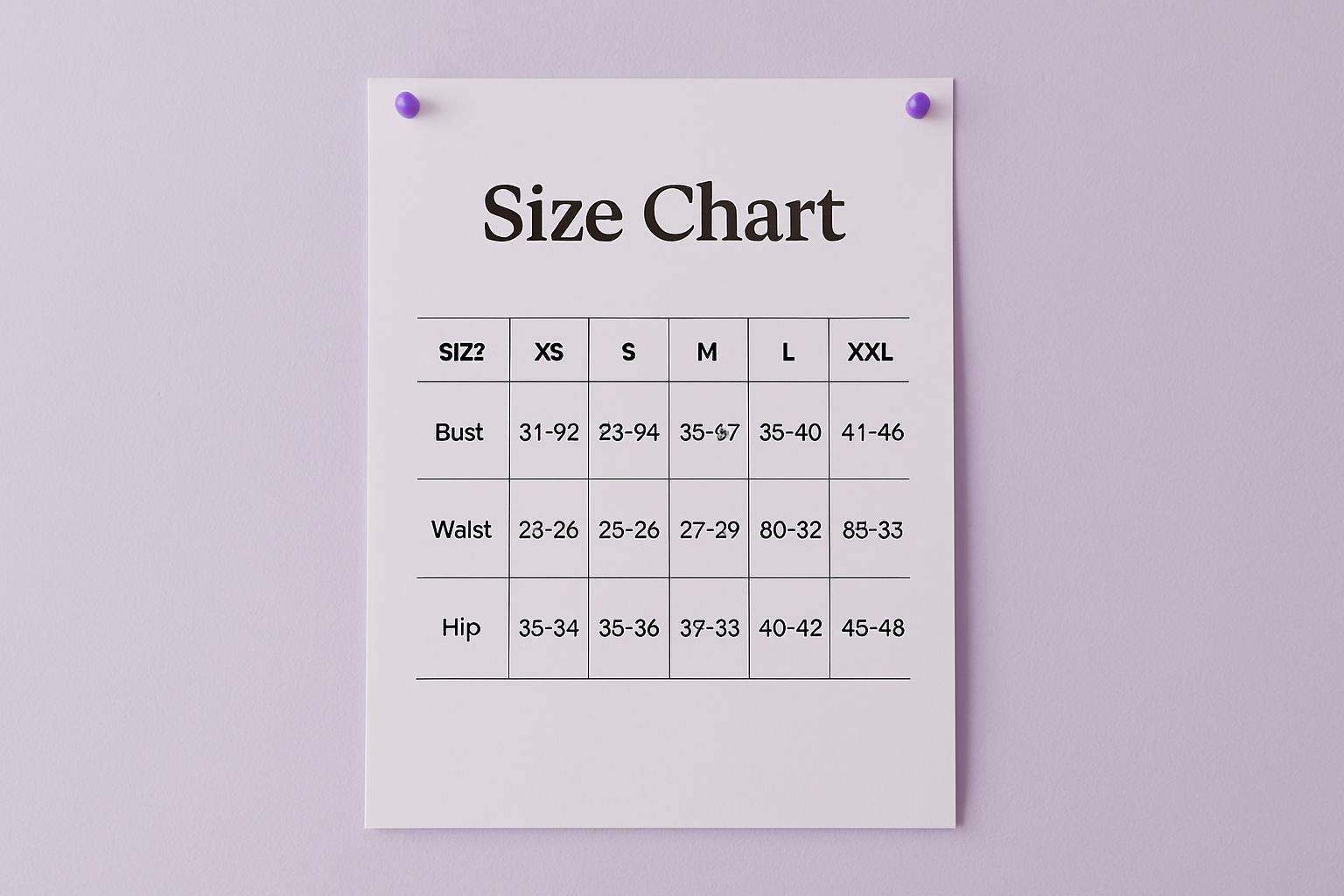
Charts and measurement cues for apparel and active. We keep it on one page sellers can print or share without a login maze.
This kit gathers the size references sellers need for apparel and active listings in one printable place. It focuses on chest, waist, hip, inseam and fit cues that reduce guesswork when a shopper compares a Takealot listing with a supplier sample.
Rosebank reviews usually check whether the chart matches the garment on hand, not just the label sewn into the neck. For coastal stock, teams often note fabric stretch, shrinkage after washing and any difference between imported grading and local expectations.
Keep a paper copy near the sample rail or packing bench when product pages are being written. Staff can mark where a tee runs narrow in the shoulders or where leggings need a note about high-rise fit, then save the final PDF with the SKU set.
Revise the chart when a supplier changes a cut, factory, fabric blend or grading rule. Small corrections on a live size table are easier than refund admin caused by a copied chart that no longer matches stock.
Cross-check sizing notes with the FAQ, resources, and suppliers pages before publishing a product range.
Charts and measurement cues for apparel and active. Owners matter. An orphaned stack becomes wallpaper real fast.
Date each revision and record what changed, such as a new supplier batch or an adjusted inseam. A short change note helps the team spot whether returns are linked to product issues or to an outdated table.
Rosebank teams often print the latest chart before checking incoming samples against a tape measure. Coastal teams may add wash and drying observations where sports fabric reacts differently to storage and handling conditions.
Store the kit alongside the supplier shortlist and the sales channel notes so measurements, fit wording and listing images stay aligned. That keeps one hoodie from carrying three different chest widths across three marketplaces.
A reviewer measures the sample garment flat, marks the figures on the sheet and notes any stretch that affects fit wording. The page is then photographed or scanned into the project folder so the listing team works from the same numbers.
When the supplier spec sheet and the physical sample disagree, the garment on hand gets checked again before any listing goes live. Neck labels and carton stickers are not treated as proof if the tape measure says otherwise.
If field notes build up after market visits or sample handovers, transfer them into a clean master copy. Handwritten comments are useful during review, but the shared version should show the final approved measurements and fit guidance.
Send details through our contact form if you want the kit checked against your live apparel or active SKUs.
Verified Google reviews